Last updated 2026-08-19
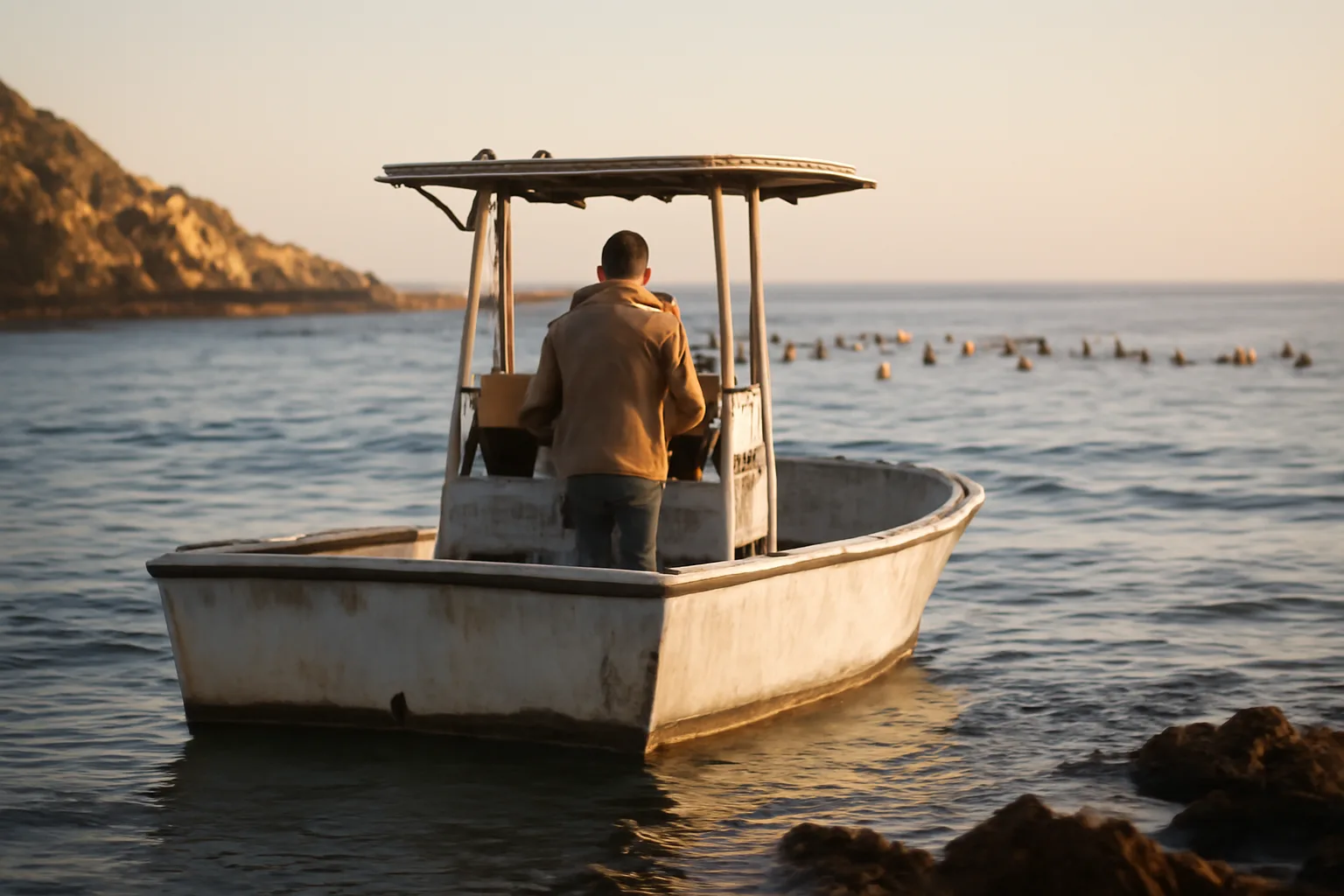
TL;DR
California does not issue a six-pack captain license. Carrying six or fewer paying passengers on an uninspected boat takes a federal USCG OUPV endorsement on a Merchant Mariner Credential. You need documented sea time, a TWIC, a physical, a drug test, first aid and CPR, and an exam or approved course. Harbor, business, and fishing paper sit on top. Confirm fees with the National Maritime Center.
Do you need a license for six-pack captain in California?
Yes. Take money to put passengers on an uninspected boat in California and federal law says a licensed operator has to be at the helm. California does not print a six-pack captain license. The U.S. Coast Guard does.
46 U.S.C. 8903 says, "An uninspected passenger vessel shall be operated by an individual licensed by the Secretary to operate that type of vessel, under prescribed regulations." [1] That is the whole argument. One paying passenger triggers it. Six is the cap on an uninspected boat under 100 gross tons. [2]
People still tell you a California six-pack license exists as a state card. It does not. What you apply for is a Merchant Mariner Credential with an Operator of Uninspected Passenger Vessels endorsement. Mariners call it OUPV or six-pack. Same ticket in San Diego, Eureka, and on Lake Tahoe. The National Maritime Center issues it. A marina or a county clerk does not.
Skip the license and you are running an uninspected passenger vessel without a licensed operator. That is a Coast Guard problem, not a local parking ticket. I would not test it. If you only take friends and nobody pays, you do not need OUPV. The minute someone pays, including a tip that is really the fare, you do.
A city business license is not a substitute. An LLC is not a substitute. Insurance is not a substitute. Get the federal credential first, then stack the local paper. If you are still mapping the first-year steps, read how to start six-pack captain in California.
What is a six-pack captain license in California?
It is a federal OUPV endorsement on a Merchant Mariner Credential, good for six or fewer passengers for hire on an uninspected vessel under 100 gross register tons. That is the California six-pack. No separate state captain card carries that name.
46 U.S.C. 2101 defines that small uninspected passenger vessel as one "carrying not more than 6 passengers, including at least one passenger-for-hire." [2] 46 CFR 11.467 is the endorsement rule that matches the definition. [3]
You pick a route. Limited names one body of water. Inland covers interior waters. Great Lakes and inland is its own box. Near-coastal reaches not more than 100 miles offshore. From California, most working ocean six-packs want near-coastal. A Tahoe or Delta operator may be fine with inland or a limited ticket. Do not buy near-coastal on pride if you will never leave a lake. The exam and the sea-time mix shift with the route.
The plastic MMC is the license. The medical certificate is separate and rides with it. TWIC is a TSA card you carry. Three pieces of plastic, one job.
How much does six-pack captain cost in California?
Plan on a few hundred dollars in federal user fees, then more for TWIC, a physical, a drug test, first aid and CPR, and, if you take one, an approved course. California adds no state captain license fee. Local business and harbor fees are a different pile.
46 CFR 10.219 publishes original officer user fees of $100 for evaluation, $110 for examination, and $45 for issuance. [4] That is $255 if you sit the Coast Guard exam. An approved course takes the exam fee off the table. Confirm the live amounts on the National Maritime Center fees page before you pay. [8] The CFR table is the published baseline, not a forever price.
TWIC is a TSA product. Check the current TWIC fee on the TSA page. [7] It has sat near the $125 mark for a five-year card, but I will not lock a number TSA can change tomorrow.
The physical (form CG-719K) costs whatever a doctor who will complete that form charges. I have seen a wide spread. Call two clinics and ask if they know the Coast Guard form. A cheap sports physical that is not on CG-719K wastes your money.
A drug test is a DOT-style 5-panel from a lab that reports on the Coast Guard chemical-test form. Local cash prices bounce. First aid and CPR from an accepted provider is usually a single Saturday.
The course is the big optional spend. Private OUPV classes in California often land in the mid hundreds to around a thousand dollars, depending on the school and whether lodging is in the price. Nobody publishes a solid statewide average. Never sat a Coast Guard multiple-choice exam? Take the course. Already hold another officer endorsement? Maybe not.
Waste of money: anyone who sells you sea time or promises a license without days on the water. That is a false statement on a federal application. Skip Master 100 tuition in year one if you only have six-pack work.
After the federal card, budget a city or county business license, a marina commercial permit if your harbor requires one, and insurance. Those are not USCG fees. They vary by town. Confirm with the harbor and the city.
How long does six-pack captain take in California?
Sea time is the long pole. A standard OUPV needs 360 days of service. [3] No course speeds that up. A limited OUPV on one body of water can rest on 90 days on that water. That is the honest fast path for a Tahoe or harbor-only operator.
Once the days are real, the rest is calendar time you do not control. TWIC appointments depend on the enrollment center. A medical exam is usually one visit plus any specialist follow-up if the doctor flags something. The National Maritime Center posts processing times for evaluations and issuance. Those numbers move. Read the current NMC processing times page and treat them as a snapshot, not a promise. [9] I will not invent a week count.
Approved courses in California often run about a week of classroom and chart work, plus the school exam. Self-study takes as long as you let it. I have watched people drag it out for months.
A clean file with a course completion, a TWIC, a fresh CG-719K, and a drug test can go to NMC as soon as your sea service letters are in hand. A messy file sits. Missing signatures on sea service, a physical that is too old, or a drug test outside the window will bounce you.
If your days are already in a logbook, you can reasonably line up TWIC, medical, drug test, and a course in the same month. Issuance after NMC accepts the file is whatever they are posting that quarter. Confirm. No one can honestly guarantee a date.
How much sea time do you need for a California six-pack?
For a near-coastal OUPV, 46 CFR 11.467 requires 360 days of service, including 90 days on ocean or near-coastal waters. [3] Inland OUPV is 360 days without that ocean slice. A limited endorsement can rest on 90 days on the waters named on the ticket.
46 CFR 10.232 defines how you count a day and how you prove it. [6] On many vessels under 100 GRT, a day can be 4 hours. Read the current text before you build a spreadsheet. Do not count days you cannot describe.
You prove time with small-vessel sea service forms, letters from owners, or discharges. Name the vessel, official number or state number, gross tons, horsepower, waters, dates, and your duties. "I fished a lot" is not a letter. If you owned the boat, you still need proof you owned it and that it moved. Registration, documentation, and a log help.
Yacht deliveries count if you can document them. Sitting at the dock does not. Time as a passenger does not. Time on a personal watercraft is a fight I would not pick.
Recency matters. The general officer rules in 46 CFR 11.201 sit on top of the OUPV section. [5] If your 360 days were a decade ago and you have been dry since, expect the evaluator to look for recent service. Build 90 recent days if you can. It is cheaper than arguing.
Great Lakes days are not a clean swap for California near-coastal ocean days. Inland rivers are not ocean. Match the water to the route you want.
What paperwork does the Coast Guard actually want?
The Coast Guard wants a complete original officer application, not a story. That means form CG-719B, sea service evidence, a TWIC (or proof you applied), a medical exam on CG-719K, a drug test, first aid and CPR, proof of identity and citizenship or residency, and either a course completion or a request to test. [14][5][13]
46 CFR 10.221 covers citizenship. U.S. citizens can hold the officer endorsement. Lawful permanent residents can be limited. Read the section if that is you. [12]
Medical standards live in 46 CFR 10.301 and the tables that follow. [13] Color vision, diabetes, sleep apnea, and meds are where files stall. Answer the form. Do not have a friend leave a box blank.
Drug testing is a chemical test for dangerous drugs under the Part 16 rules. [15] A leftover employment screen from a warehouse job is usually the wrong panel or the wrong form. Pay for the right one.
First aid and CPR have to come from an accepted provider and be recent enough for 46 CFR 11.201. [5] A 2018 card will not carry a 2026 application.
Want the federal forms and a bareboat paper pack in one bundle? OUPVPath sells a $149 one-time USCG OUPV + Bareboat Kit. You can also pull every Coast Guard form free from the NMC forms page. [14] I would not pay anyone to expedite NMC. They do not sell a front-of-line pass to the public.
Submit exactly what the current NMC checklist asks. California applicants use the same national checklist as everyone else. There is no Sacramento overlay on CG-719B.
Does California add its own captain license on top of OUPV?
No. California does not issue a six-pack captain license and does not run a parallel captain exam for this work. The license is federal.
You may still need other California paper to run the business. That is not a captain license. A city business tax certificate, a county permit, a harbor commercial activity permit, and a seller's permit if you sell taxable goods are common. None of them lets you carry passengers without OUPV.
California also has a recreational California Boater Card under Harbors and Navigation Code sections starting at 678. Exemptions are listed in section 678.11. [11] A lot of professional operators fit an exemption, including some people who already hold a Coast Guard operator credential. Read the statute before you skip it. I would not guess.
An LLC from the Secretary of State does not license you to take six paying passengers. I keep saying that because people keep asking.
Move the same federal MMC to another state and the OUPV travels with you. Harbor rules do not. Compare six-pack captain license in Arizona or six-pack captain license in Colorado if you split seasons.
Do fishing charters and harbors add extra California paper?
If clients pay you so they can take fish from your boat, California adds commercial passenger fishing paper. Fish and Game Code section 7920 is the commercial passenger fishing boat license statute. [10] Confirm the current application and fee with the Department of Fish and Wildlife. I will not invent this year's CDFW price.
That CPFV license sits on the boat and the owner side. It does not replace your OUPV. You still need the Coast Guard credential to operate the uninspected passenger vessel. Two agencies. Two desks.
Harbor masters from San Diego to Crescent City write their own commercial activity rules. Some want proof of insurance with named limits. Some want a slip in a commercial basin. Some ban soliciting on the dock. Call the harbor you will actually work, not a social media group.
Coastal landings and state parks can add another permit if you load people from their docks. That is local. Budget time for it after NMC issues the MMC, not before. You cannot book legal six-pack trips on a pending application.
Insurance is not optional in any harbor I would work. The Coast Guard does not sell it. Get a marine policy that names passenger-for-hire. A homeowner boat policy will not cover it.
Should you get inland, limited, or near-coastal OUPV in California?
Get the route that matches the water you will work. From most California ocean ports that is near-coastal OUPV, which 46 CFR 11.467 ties to 90 days of ocean or near-coastal service inside your 360. [3]
Inland covers interior waters. It does not make you legal 20 miles off the Channel Islands. A limited OUPV names a body of water. Fine for a single lake. Painful if you later want to run Catalina.
| Route on the OUPV | Sea service in 46 CFR 11.467 | Typical California use |
|---|---|---|
| Limited | 90 days on the named waters | One lake or one harbor |
| Inland | 360 days | Delta, some bays, lakes |
| Near-coastal | 360 days, including 90 ocean or near-coastal | Ocean six-packs |
You can raise the scope later with more sea time and, if required, more examining. I would not overbuy the first ticket just to impress a marina. I also would not underbuy to save a week of class if the whole plan is ocean charters out of Newport or Monterey.
Alaska time is its own story. Split the year north? Read six-pack captain license in Alaska. The federal MMC is the same plastic. The waters and the local paper are not.
What trips and vessels can you legally run with the card?
Six paying passengers. That is the product. Crew you employ is a different count, and you need to be honest about who is crew and who is a guest who happens to coil a line. The vessel has to be uninspected and not more than 100 GRT for this endorsement. [3][2]
Carry seven paying people and you have left OUPV. Now you are in inspected small passenger vessel territory. That is a different build standard, a different certificate of inspection, and usually a Master endorsement. Do not do it even once.
Near-coastal OUPV reaches not more than 100 miles offshore. If you sell an overnight offshore trip, read the route on your card. Limited means limited.
You can work as operator for an owner. You can own the boat. The license is personal. It does not float with the hull if you sell.
Bareboat charter (the boat goes out without you, the charterer is the operator) is a different legal shape. People use fake bareboat papers to dodge OUPV. The Coast Guard looks at who really controls the vessel. I would not build a business on that dodge.
What mistakes stall California six-pack applications?
The files that stall are boring. Sea service letters with no official number. Physicals signed by someone who is not an allowed examiner. Drug tests older than the window. Names that do not match the TWIC, the passport, and the CG-719B. A course certificate for the wrong route.
People also log dock time. Evaluators can tell. If the boat has no engine hours and you claim 200 days, expect questions.
Another miss: applying for near-coastal with only Delta days. The 90 ocean or near-coastal days are not a suggestion. [3]
Paying a consultant to rewrite your sea time into something prettier is how you get an 18 U.S.C. 1001 problem. I would rather wait and earn the days.
Forgetting that renewal is its own paper path is how working captains go dark. Put Six-pack captain renewal in California on your calendar the day the MMC arrives.
How do you keep a six-pack license after you have it?
An MMC is issued for a fixed term. Medical certificates expire on their own clock, often sooner than the credential. TWIC expires on the TSA clock. You can be legal on the license and illegal on the medical. Track all three.
Renewal sea service and the current CG-719B renewal path are on the NMC site. Do not use an original-application checklist for a renewal. Confirm fees on the same 46 CFR 10.219 table and the NMC fee page. [4][8]
If your medical lapses, tie up at the dock until a new CG-719K is issued. That is not optional.
I would start the renewal file months before the printed date. NMC processing times change. [9] A late renewal can leave you tied to the dock in season.
What would you actually do if you were applying from California?
I would count real days first. If I am short, I would work as unpaid crew or paid deck until the log is honest. Then I would book TWIC, a CG-719K physical, and a DOT drug test in the same two-week window. Then an approved near-coastal OUPV course if I wanted ocean work out of a California port.
I would not form an LLC first. I would not paint a logo first. I would not pay for a Master class until six seats are actually full and someone is asking for seven.
After the MMC arrives I would call the harbor, buy real passenger-for-hire insurance, and only then deal with CDFW if the product is fishing. [10] I would read HNC 678.11 before I ignored the Boater Card. [11]
OUPVPath is an independent publisher, not a law firm and not a Coast Guard desk. If you want the kit, it is a $149 one-time USCG OUPV + Bareboat Kit. Confirm every fee and processing time with the National Maritime Center before you mail a file. For the first-year operating sequence, use how to start six-pack captain in California. Split time inland too? Peel off to How to start six-pack captain in Colorado for that state's pile.
Frequently asked questions
Do you need a license for six-pack captain in California?
Yes, if anyone pays to ride. Federal law requires a licensed operator on an uninspected passenger vessel. California does not print that license. You apply to the U.S. Coast Guard for a Merchant Mariner Credential with an OUPV endorsement. A city business license or an LLC does not replace it.
How much does six-pack captain cost in California?
46 CFR 10.219 publishes $100 evaluation, $110 examination, and $45 issuance for an original officer endorsement, or $255 if you sit the exam. Add TWIC, a CG-719K physical, a drug test, first aid and CPR, and often a course in the mid hundreds to about a thousand. Confirm live USCG and TSA amounts before you pay. Harbor and CDFW fees are separate.
How long does six-pack captain take in California?
The long pole is sea time: 360 days for a standard OUPV, or 90 days on one body of water for a limited ticket. After that, TWIC, medical, a course of about a week, and NMC review set the clock. NMC posts processing times and they move. Nobody can honestly promise a finish date.
Can you run ocean charters in California with only an inland OUPV?
No. Inland does not cover ocean or near-coastal routes. From ports like San Diego, Newport, or Monterey you want near-coastal OUPV, which needs 90 of your 360 days on ocean or near-coastal waters under 46 CFR 11.467. A limited lake ticket will not take you to Catalina.
Does California require a boater card if you already have a USCG license?
The recreational California Boater Card lives in Harbors and Navigation Code sections starting at 678. Exemptions are listed in section 678.11. Many professional operators with a Coast Guard operator credential fit an exemption, but read the statute. Do not assume. The boater card still is not a six-pack license.
Do you need a Master 100 instead of OUPV in California?
Not for six paying passengers on an uninspected boat under 100 GRT. That is exactly what OUPV is for. Master becomes the path when the boat is inspected or you want more than six passengers. Master also costs more sea time. I would not buy the bigger class in year one unless the work already demands it.
Can you use Great Lakes sea time for a California near-coastal OUPV?
Great Lakes time helps your total days. It does not automatically satisfy the 90 days of ocean or near-coastal service that 46 CFR 11.467 requires for a near-coastal endorsement. Match the water to the route. Inland river days have the same problem for an ocean ticket.
What if your sea time is on a friend's boat?
It can count if the letter is real. You need the vessel identity, tonnage, waters, dates, hours or days, and your actual duties, signed by someone who can swear to it. 46 CFR 10.232 is the counting rule. A vague note that you helped out on weekends will not survive evaluation.
Do you need a drug test if you already have a TWIC?
Yes. TWIC is a TSA identity and security card. The Coast Guard still wants a chemical test for dangerous drugs under the Part 16 rules, on the right form, inside the application window. A TWIC approval letter is not a substitute drug screen.
How many passengers can a six-pack carry in California waters?
Six paying passengers on an uninspected vessel, including at least one passenger-for-hire, under 46 U.S.C. 2101 and 46 CFR 11.467. A seventh paying guest pushes you into inspected small passenger vessel rules. Employed crew is a different count. Do not dress guests up as crew.
Does forming an LLC replace the captain license?
No. An LLC is a business wrapper. It does not authorize you to operate an uninspected passenger vessel. 46 U.S.C. 8903 still requires a licensed individual at the operation of that vessel. Form the company after you know you can hold the MMC, not before.
Where do you send a six-pack application from California?
To the U.S. Coast Guard National Maritime Center, on the current original-officer process and form CG-719B. California has no state captain desk for this credential. Use the live NMC forms and checklist. Confirm the current submission method on the NMC site before you mail or upload.
What happens if you carry seven passengers on a six-pack boat?
You have left the uninspected six-passenger box. That work wants an inspected small passenger vessel and, in practice, a Master endorsement rather than OUPV. It is not a rounding error. Do not sell the seventh seat on an uninspected hull.
Do you need STCW for a six-pack out of San Diego?
Not for ordinary domestic OUPV work inside the usual near-coastal box. STCW is a different training pile aimed at international and certain seagoing service. Most California six-packs stay domestic. If a specific contract demands STCW, that contract will say so. Do not buy the extra stack on a rumor.
Sources
- U.S. House Office of the Law Revision Counsel, 46 U.S.C. § 8903: An uninspected passenger vessel must be operated by an individual licensed by the Secretary.
- U.S. House Office of the Law Revision Counsel, 46 U.S.C. § 2101: An uninspected passenger vessel of less than 100 gross tons is defined as carrying not more than 6 passengers, including at least one passenger-for-hire.
- eCFR, 46 CFR § 11.467 Requirements for an OUPV endorsement: OUPV service requirements include 360 days for a standard endorsement (with 90 ocean or near-coastal days for near-coastal) and a 90-day path for a limited local endorsement, on uninspected vessels under 100 GRT with six or fewer passengers.
- eCFR, 46 CFR § 10.219 Fees: Published original officer user fees are $100 evaluation, $110 examination, and $45 issuance.
- eCFR, 46 CFR § 11.201 General officer endorsement requirements: General officer rules (including age, first aid/CPR, and recency overlays) apply on top of the OUPV section.
- eCFR, 46 CFR § 10.232 Sea service: Sea service days are defined and documented under 46 CFR 10.232, including how a day is counted on smaller vessels.
- Transportation Security Administration, TWIC program page: TWIC is issued by TSA and the current application fee is posted on the TSA TWIC page.
- U.S. Coast Guard National Maritime Center, User Fees: Live Merchant Mariner Credential user fees must be confirmed on the NMC fees page.
- U.S. Coast Guard National Maritime Center, Processing Times: NMC posts current evaluation and issuance processing times, which change and are not a guarantee.
- California Legislative Information, Fish and Game Code § 7920: California requires a commercial passenger fishing boat license under Fish and Game Code section 7920 when people pay to take fish from the boat.
- California Legislative Information, Harbors and Navigation Code § 678.11: California Boater Card exemptions are listed in Harbors and Navigation Code section 678.11.
- eCFR, 46 CFR § 10.221 Citizenship and additional requirements: Citizenship and lawful-permanent-resident limits for officer endorsements are set in 46 CFR 10.221.
- eCFR, 46 CFR § 10.301 Medical certificate general requirements: Merchant mariners must hold a medical certificate issued under the Part 10 medical rules, using the Coast Guard physical process.
- U.S. Coast Guard National Maritime Center, form CG-719B Application for Merchant Mariner Credential: Original and other MMC applications are filed on form CG-719B from the National Maritime Center.
- eCFR, 46 CFR § 16.210 Pre-employment testing requirements: Chemical testing for dangerous drugs is required under Coast Guard Part 16 rules before covered employment and for credential applications.